
Author: Nadeem Akhtar

The medical industry has always been on the forefront of innovation, with its ability to create patient-specific implants, prosthetics, and anatomical models—3D printing has revolutionized the way medical professionals approach patient care.
In this blog post, we’ll explore the best materials and most popular 3D printing methods used in the medical industry, as well as common issues that 3D printing can solve in the medical field. We’ll also showcase some real-world use cases of 3D printing in medicine and the impact it has made on patient outcomes.
Join us as we delve into the exciting world of medical 3D printing!
Table of Contents
Which medical industry problems can be solved by using 3D printers?
- Customization
- Time and cost efficiency
- Surgical planning and training
- Accessibility
- Research and development
3D Printing Methods for Medical
- Stereolithography (SLA)
- Fused Deposition Modeling (FDM)
- Selective Laser Sintering (SLS)
- Multi-Jet Fusion (MJF)
Which medical industry problems can be solved by using 3D printers?

The medical industry is faced with numerous challenges, from complex surgical procedures to the need for patient-specific treatments and devices. However, 3D printing has emerged as a powerful tool in the arsenal of medical professionals all around the globe.
From creating customized implants and prosthetics to enhancing surgical planning and training, 3D printing has transformed the way the medical field has been able to problem-solve, leading to overwhelming positive results that improve patient outcomes.
Customization
Patients have unique body structures, and there is often a need for customized medical devices or implants. 3D printing technology enables the creation of personalized and precise medical implants, prosthetics, and other devices tailored to the patient’s individual needs.
What might prompt someone in the medical industry to adopt 3D printing for the purpose of enhancing their medical customization?
Personalization: With 3D printing, medical professionals can create personalized medical devices, prosthetics, and implants that are tailor-made to the specific needs of each patient. This can lead to better outcomes and higher patient satisfaction.
Precision and Accuracy: 3D printing technology allows for the creation of highly accurate and precise models, which can improve the fit and functionality of medical devices and implants. This can help reduce complications and improve overall patient outcomes.
Speed: 3D printing technology enables faster production times, reducing the wait time for patients who need customized medical devices or implants.
Cost-effectiveness: 3D printing technology can reduce the cost of medical device production and customization, making it a more cost-effective solution for medical professionals and patients alike.
Innovation: 3D printing technology enables medical professionals to create innovative medical devices and implants that may not have been possible with traditional manufacturing processes. This can lead to new and better treatment options for patients.
Time and cost efficiency
Traditional medical manufacturing processes can be time-consuming and expensive. Fortunately, 3D printing technology can offer a more efficient solution.
What factors would motivate someone in the medical industry to adopt 3D printing for the purpose of achieving greater time and cost efficiency in their operations?
Faster production times: 3D printing technology can produce medical devices and parts more quickly than traditional manufacturing methods. This can reduce the wait time for patients and increase efficiency in the healthcare system.
Reduced waste: 3D printing technology can produce medical devices and parts with minimal waste, reducing material costs and minimizing environmental impact.
Cost savings: 3D printing can be more cost-effective than traditional manufacturing methods, particularly for low-volume production runs. This can help reduce costs for healthcare providers and patients alike.
Customization: 3D printers can produce customized medical devices and implants quickly and at a lower cost, compared to traditional manufacturing methods.
On-demand production: The use of medical 3D printers enables on-demand production of medical devices and parts, reducing the need for large inventory storage and associated costs.
Surgical planning and training
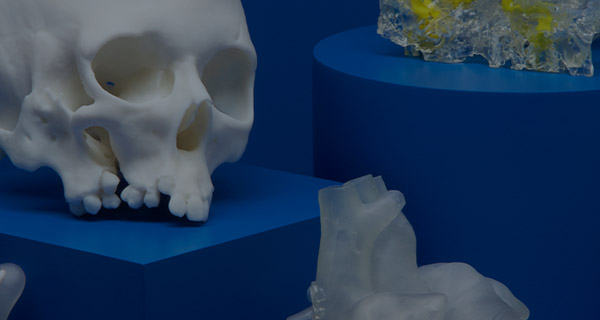
Surgeons can use 3D-printed models to plan and simulate surgeries, reducing the risk of complications and improving overall patient outcomes. Additionally, medical professionals can seamlessly use 3D-printed models for training and education purposes with ease.
What are some other benefits that would lead someone in the medical industry to adopt 3D printing for their processes related to surgical planning and training?
Enhanced visualization: 3D printed models can provide more realistic and accurate visualization of anatomical structures, enabling better surgical planning and simulation.
Improved communication: 3D printed models can facilitate better communication between medical professionals and patients, enabling them to better understand surgical procedures and outcomes.
Reduced risk: 3D printed models can enable surgeons to practice and refine surgical techniques, reducing the risk of complications during actual surgeries.
Limit costs: 3D printed models can reduce the cost of surgical training and preparation by enabling surgeons to practice procedures without the need for expensive cadaver labs or animal models.
Improved patient outcomes: 3D printed models can enable surgeons to better plan and execute surgical procedures, leading to improved patient outcomes and satisfaction.
Accessibility
3D printing technology can undoubtedly help improve access to medical devices, particularly in developing countries where traditional medical manufacturing processes may not be readily available.
What factors would motivate someone in the medical industry to adopt 3D printing for the purpose of increasing accessibility to medical solutions?
Customization: 3D printing technology can enable the creation of customized medical devices, prosthetics, and implants for patients with unique needs, increasing accessibility to medical solutions.
Availability: 3D printing technology can make medical devices and parts more readily available in areas where traditional manufacturing processes may not be accessible or feasible.
Affordability: 3D printing technology can reduce the cost of medical device production and customization, making it a more affordable solution for patients and healthcare providers.
Innovation: 3D printing technology enables medical professionals to create innovative medical devices and implants that may not have been possible with traditional manufacturing processes, expanding the range of accessible medical solutions.
Patient empowerment: 3D printing technology can enable patients to participate more actively in their own care by providing them with greater control over the customization and design of their medical devices and prosthetics.
Research and development
3D printing can support medical research by providing a means to create realistic and accurate models of body parts, tissues, and organs, making it possible to test new treatments and procedures before conducting human trials.
What reasons would lead someone in the medical industry to adopt 3D printing for their research and development processes?
Realistic modeling: 3D printing technology can produce highly accurate and realistic models of body parts, tissues, and organs for research and development purposes.
Faster prototyping: 3D printing technology enables faster prototyping of medical devices and parts, enabling more rapid development of new solutions.
Device Specificity: 3D printing technology can create customized models for specific research needs, enabling researchers to study unique anatomical structures or conditions.
Cost savings: 3D printing technology can reduce the cost of research and development by enabling researchers to produce and test prototypes more quickly and cost-effectively.
Innovation: 3D printing technology enables researchers to explore new and innovative medical solutions that may not have been possible with traditional manufacturing processes.
3D Printing Methods for Medical

Each medical 3D printing method has its own advantages and limitations, and it is important to select the one that is best suited for specific medical applications.
In this section of our medical 3D printing blog post, we will explore some of the best 3D printing methods used in the medical industry and why someone would choose a certain method over others. From Stereolithography (SLA) to Multi-Jet Fusion (MJF), we will cover a range of methods that are transforming the medical field with their unique capabilities.
Stereolithography (SLA)
SLA is a type of 3D printing that uses a photopolymer resin to create parts and components with high accuracy and resolution. SLA is commonly used in medical applications for creating medical implants, prosthetics, and anatomical models.
Here are some reasons why someone in the medical field may choose to use SLA based 3D printing over other methods:
High resolution: SLA is capable of creating parts and components with high accuracy and resolution, down to the micron level. This is particularly important for medical applications, such as creating anatomical models or surgical guides, where accuracy and precision are critical.
Variety of materials: SLA can be used with a variety of materials, including biocompatible resins that are safe for use in contact with living tissue. This makes SLA a versatile option for medical applications that require specific material properties, such as flexibility, stiffness, or transparency.
Speed: SLA is a fast 3D printing method, which means that parts and components can be produced quickly and efficiently. This is particularly important for medical applications that require a fast turnaround time, such as creating surgical guides or prosthetics.
Highly Customizable: SLA allows for the creation of customized parts and components that are tailored to the specific needs of each patient. This is particularly important for medical applications that require patient-specific anatomical models or prosthetics.
Low waste: SLA is a low-waste 3D printing method, which means that it generates less waste than other methods, such as FDM. This is particularly important for medical applications, where the use of biocompatible materials and reduced waste is critical.
Fused Deposition Modeling (FDM)
FDM is a type of 3D printing that uses a thermoplastic filament to create parts and components layer-by-layer. FDM is commonly used in medical applications for creating patient-specific surgical tools, anatomical models, and prosthetics.
FDM based 3D printing is an excellent method for some, but which factors would push someone to select this method over others?
Variety of materials: FDM can be used with a variety of materials, including biocompatible plastics that are safe for use in contact with living tissue. This makes FDM a versatile option for medical applications that require specific material properties, such as flexibility, strength, or transparency.
Cost-effective: FDM is a cost-effective 3D printing method, which means that it is more accessible for medical professionals and institutions with limited budgets. This is particularly important for medical applications that require a large number of models or prosthetics.
User-friendly: FDM is a user-friendly 3D printing method, which means that it is easy to operate and requires minimal training. This is particularly important for medical professionals who may not have extensive experience with 3D printing.
Customization: FDM allows for the creation of customized parts and components that are tailored to the specific needs of each patient. This is particularly important for medical applications that require patient-specific prosthetics or surgical tools.
Durability: FDM parts and components are durable and strong, which means that they can withstand wear and tear and are long-lasting. This is particularly important for medical applications that require prosthetics or surgical tools that can withstand the stresses of regular use.
Selective Laser Sintering (SLS)
SLS is a type of 3D printing that uses a laser to sinter powdered material, such as metal or plastic, into a solid part or component. SLS is commonly used in medical applications for creating medical implants, prosthetics, and anatomical models.
There are many factors that go into selecting a 3D printing method for medical applications, but here are some of the most common:
High resolution: SLA is capable of creating parts and components with high accuracy and resolution, down to the micron level. This is particularly important for medical applications, such as creating anatomical models or surgical guides, where accuracy and precision are critical.
Variety of materials: SLA can be used with a variety of materials, including biocompatible resins that are safe for use in contact with living tissue. This makes SLA a versatile option for medical applications that require specific material properties, such as flexibility, stiffness, or transparency.
Speed: SLA is a fast 3D printing method, which means that parts and components can be produced quickly and efficiently. This is particularly important for medical applications that require a fast turnaround time, such as creating surgical guides or prosthetics.
Customization: SLA allows for the creation of customized parts and components that are tailored to the specific needs of each patient. This is particularly important for medical applications that require patient-specific anatomical models or prosthetics.
Low waste: SLA is a low-waste 3D printing method, which means that it generates less waste than other methods, such as FDM. This is particularly important for medical applications, where the use of biocompatible materials and reduced waste is critical.
Multi-Jet Fusion (MJF)
MJF is a type of 3D printing that uses a combination of inkjet printing and heat to fuse nylon powder into a solid part or component. MJF is commonly used in medical applications for creating medical implants, prosthetics, and anatomical models.
Why would someone in the medical field choose to use MJF based 3D printing over other methods?
High precision: MJF is capable of creating parts and components with high precision, which is particularly important for medical applications that require accurate anatomical models or surgical guides.
Variety of materials: MJF can be used with a variety of materials, including biocompatible plastics that are safe for use in contact with living tissue. This makes MJF a versatile option for medical applications that require specific material properties, such as flexibility, stiffness, or radiopacity.
Speed: MJF is a fast 3D printing method, which means that parts and components can be produced quickly and efficiently. This is particularly important for medical applications that require a fast turnaround time, such as creating implants or prosthetics for emergency cases.
Cost-effective: MJF is a cost-effective 3D printing method, which means that it is more accessible for medical professionals and institutions with limited budgets. This is particularly important for medical applications that require a large number of models or prosthetics.
Customization: MJF allows for the creation of customized parts and components that are tailored to the specific needs of each patient. This is particularly important for medical applications that require patient-specific implants or prosthetics.
Which Materials are Ideal for Medical 3D Printing?
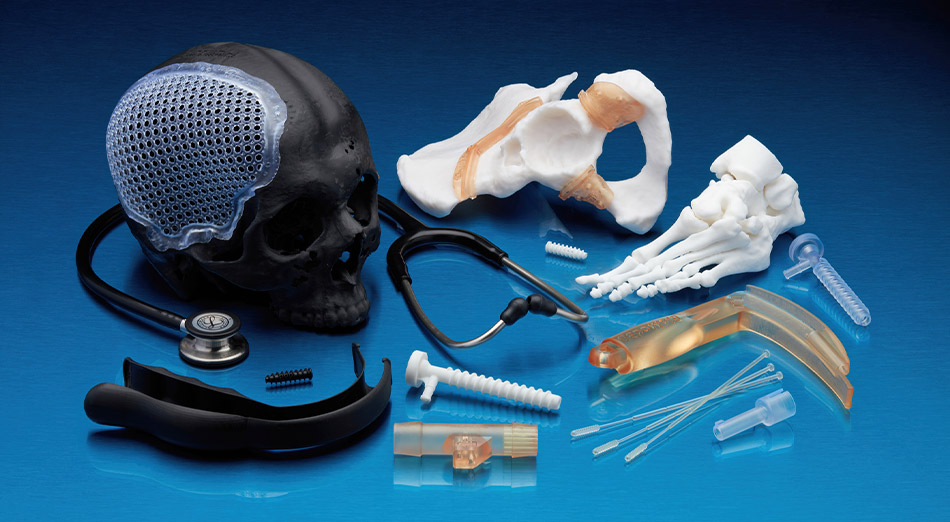
Choosing the right 3D printing material is crucial when it comes to medical applications. Materials must not only be biocompatible and safe for use in contact with living tissue but also have the necessary physical properties to meet the specific needs of each application.
In this section, we’ll explore some of the best 3D printing materials used in the medical industry, their key advantages, and how they are used in various medical applications. From biocompatible resins to metals and hydrogels, we’ll cover a range of materials that are transforming the medical field with their unique properties and capabilities.
Biocompatible resins
Biocompatible resins are a popular choice in medical 3D printing applications due to their biocompatibility, making them safe to use in contact with living tissue without causing harm or toxicity.
These resins are used to create medical implants, prosthetics, and surgical guides that are tailored to each patient’s specific needs. Biocompatible resins offer advantages over other materials, as they can be designed to have a range of mechanical properties and used to create complex shapes and geometries that may not be possible with other manufacturing methods.
This enables the creation of customized medical solutions that are better suited to individual patients, making them a versatile option for medical 3D printing applications.
Polycarbonate (PC)
Polycarbonate (PC) is a strong and durable thermoplastic material used in medical 3D printing applications, such as dental implants, surgical instruments, and medical device housings. Its toughness, impact resistance, and ability to withstand high temperatures make it ideal for applications requiring durable, long-lasting parts or components.
The transparency of PC allows for easy visualization of internal structures, and it is easy to sterilize, making it suitable for use in medical environments. PC is also advantageous over other materials, as it can be molded into complex shapes and customized for individual patients. It is lightweight and has a high strength-to-weight ratio, making it useful for applications where weight is important.
Polyether ether ketone (PEEK)
PEEK is a high-performance polymer used in medical 3D printing applications due to its biocompatibility and excellent mechanical and chemical properties. PEEK is commonly used in medical implants, such as spinal and dental implants, due to its ability to integrate well with living tissue. It has a high strength-to-weight ratio, excellent wear resistance, and can withstand high temperatures, making it suitable for applications that require durability.
PEEK is also resistant to chemical corrosion, radiolucent, lightweight, and has a lower modulus of elasticity than metals, which reduces the risk of bone resorption and makes it more comfortable for patients.
Titanium alloys
The use of Titanium alloys in medical 3D printing has several advantages, including their strength, biocompatibility, and ability to integrate well with living tissue. They are commonly used in medical implants because they are strong, lightweight, and safe to use in the human body. Titanium alloys also have a high resistance to corrosion and wear, making them a durable choice.
Additionally, they are radiopaque and can be customized to fit the specific needs of each patient using 3D printing technology. Overall, Titanium alloys are a versatile and advantageous option for medical 3D printing applications.
Hydrogels
Hydrogels are a popular choice for medical professionals in 3D printing applications because of their water-absorbing properties, which make them ideal for creating soft tissue scaffolds and other flexible materials. They can mimic the properties of living tissues and be customized to have specific properties such as stiffness, elasticity, and porosity.
Furthermore, hydrogels can be loaded with therapeutic agents to promote tissue regeneration, making them a versatile choice for medical 3D printing applications. Compared to other materials, hydrogels are lightweight, biocompatible, easy to sterilize, and can be molded into complex shapes and geometries, making them a highly advantageous option.
Real World
Applications and Use Cases
The medical industry has been revolutionized by the introduction of 3D printing technology. From creating patient-specific models and surgical guides to printing prosthetics and implants, the applications of 3D printing in medicine are vast and ever-expanding.
In this section, we will explore some of the most significant real-world use cases of 3D printing in the medical industry, highlighting the benefits and advantages this technology offers to medical professionals and patients alike.
- UltiMaker
- Formlabs
- Raise3D
- BCN3D
- Formlabs

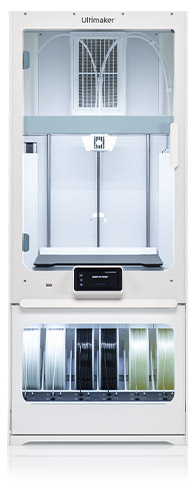
UltiMaker S7 Pro Bundle
Product Detail >3D Printing Method
Fused filament fabrication (FFF)
Build Volume
330 x 240 x 300 mm
Price
$11,500.00*
In a medical setting, the UltiMaker S7 Pro Bundle’s key benefit is its capacity to create high-quality, personalized models and devices, which can assist healthcare professionals in improving patient outcomes and enhancing surgical preparation, all while being a cost-effective 3D printing solution.


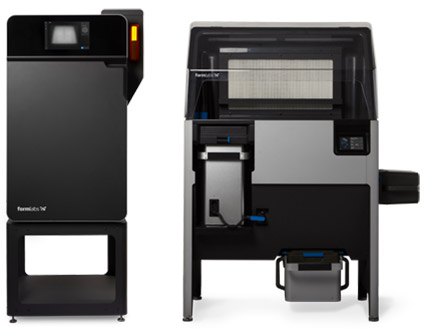
Formlabs Fuse 1+ 30W Printer Package
Product Detail >3D Printing Method
Selective Laser Sintering (SLS)
Build Volume
165 × 165 × 300 mm
Price
Quote Required
The Formlabs Fuse 1+ 30W is a popular choice in the medical setting due to its ability to produce high-quality, durable parts in a range of medical-grade materials, making it suitable for creating prosthetics, surgical tools, and other medical devices.

Medical 3D Printing Use Case
Affordable SLS 3D Printing For Patient-Specific Prosthetic Solutions
Download Now
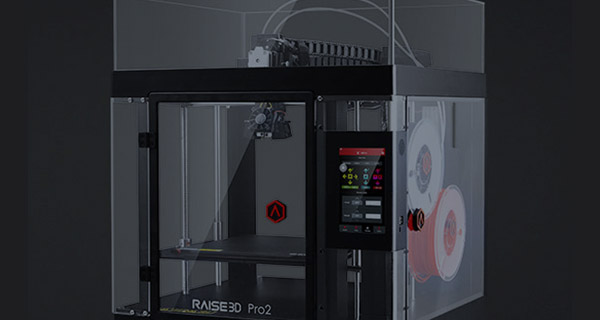
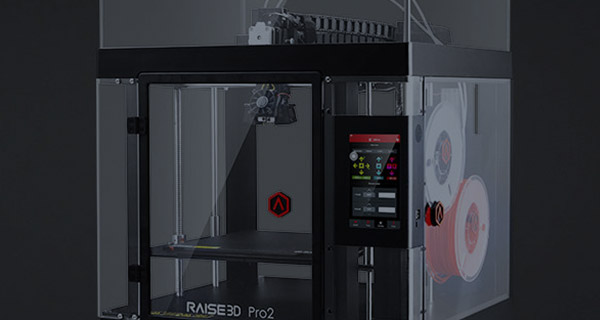
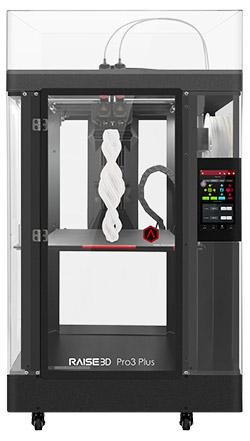
Raise3D Pro3 Plus
Product Detail >3D Printing Method
Fused filament fabrication (FFF)
Build Volume
300 x 300 x 605 mm
Price
$7,599.00*
The Raise3D Pro3 Plus is a popular choice in the medical setting due to its large build volume, high resolution, and reliability, making it suitable for producing complex, patient-specific models and devices. It also offers a range of medical-grade materials, allowing for the creation of biocompatible and sterilizable devices.

Medical 3D Printing Use Case
3D Printing in Medicine: Customized Bolus and Shields For Radiotherapy
Download Now
BCN3D Epsilon W50 with Smart Cabinet
Product Detail >3D Printing Method
Fused filament fabrication (FFF)
Build Volume
420 × 300 × 400 mm
Price
$11,995.00*
The BCN3D Epsilon W50 with Smart Cabinet is an ideal choice in the medical setting due to its high reliability, large build volume, and ability to print in a range of medical-grade materials. It also has advanced features like filament detection and auto bed leveling, making it suitable for creating complex patient-specific models and devices with ease.


Medical 3D Printing Use Case
Additive manufacturing helps isolate cells from aggressive breast cancers
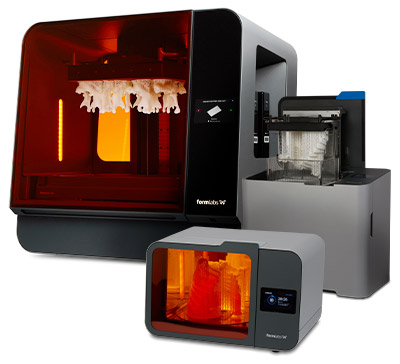
Download NowFormlabs Form 3BL Complete Package
Product Detail >3D Printing Method
Low-Force Stereolithography (LFS)
Build Volume
335 × 200 × 300 mm
Price
$20,400.00
The Formlabs Form 3BL is a popular choice in the medical setting due to its ability to produce high-quality, biocompatible parts that meet medical-grade standards. With advanced features like automatic resin dispensing and remote printing capabilities, it is suitable for creating surgical guides, prosthetics, and other medical devices with precision and accuracy.


Get Ahead of the Competition with
Medical 3D Printing
Looking for more expertise on a 3D printer or material? Give our sales team a call, send an email, or fill out our contact form so we can help you get started with your 3D printing journey.
Contact Our Sales Team Now!

The automotive industry has undergone a significant transformation over the years, due in part to one revolutionary technology: 3D printing.
Through the adoption of 3D printers, many big names in the automotive industry have been able to reduce lead times, improve efficiency, and create complex designs that would have been impossible with traditional manufacturing methods.
However, we understand that with so many 3D printers, materials, and applicational uses in the market, it can be challenging to choose the right one for your needs.
For that reason, we’d like to provide you with a breakdown on how 3D printers solve automotive industry problems, which materials make sense and why, and some compelling real-world use cases, so you can make an informed decision on which 3D printers will make sense for you.
Table of Contents
Solving Common Automotive Problems with 3D Printers
Industrial vs. Large Format vs. Desktop 3D Printers for the Automotive Industry
- Industrial Automotive 3D Printers
- Large Format Automotive 3D Printers
- Desktop Automotive 3D Printers
Solving Common Automotive Problems
with 3D Printers

Prototyping
Automotive manufacturers spend a significant amount of time and money on prototyping new parts or vehicles. With 3D printing, manufacturers can quickly and cost-effectively produce prototypes, allowing them to test and refine designs more efficiently.
Why would someone in the automotive industry consider picking up 3D printing for their prototyping processes?
Speed: 3D printing enables the rapid production of parts, allowing designers and engineers to quickly iterate and refine their designs. This speeds up the prototyping process, enabling the development of new products in less time than traditional methods.
Cost: 3D printing is a cost-effective way of creating prototypes. Traditional prototyping methods, such as injection molding, can be expensive and time-consuming. 3D printing eliminates the need for expensive molds and tooling, thus reducing costs.
Complexity: 3D printing allows the creation of complex geometries that would be difficult or impossible to produce with traditional methods. This enables designers to create highly detailed, intricate parts with ease, which can be tested and refined before committing to mass production.
Customization: 3D printing enables the creation of highly customized parts. This is particularly useful in the automotive industry, where many parts need to be tailored to specific models or applications.
Supply Chain Management
The automotive industry relies heavily on a complex network of suppliers and distributors. With 3D printing, manufacturers can reduce their reliance on external suppliers by producing parts in-house, which can help to streamline their supply chain management.
What are some key advantages to using 3D printers to help solve supply chain problems?
Reduced Shipping Costs: With 3D printing, parts can be produced locally, reducing shipping costs and lead times associated with transporting parts from remote locations. This can help automotive manufacturers to reduce their supply chain costs and improve their overall logistics efficiency.
Reduced Tooling Costs: Traditional manufacturing methods require expensive tooling, such as molds and dies, which can be time-consuming and expensive to produce. 3D printing eliminates the need for tooling, reducing lead times and tooling costs associated with traditional manufacturing methods.
Improved Sustainability: 3D printing produces less waste than traditional manufacturing methods, reducing the environmental impact of the automotive industry. This can help automotive manufacturers to improve their sustainability profile and meet customer demands for environmentally friendly products.
Maintenance and Repair
Maintenance and repair operations are critical to the success of the automotive industry. However, traditional manufacturing methods can often lead to long lead times and high costs associated with the production of replacement parts. This is where 3D printing technology can help.
What are some key ways that 3D printers are helping automotive manufacturers with their maintenance and repairs?
Replacement Parts: With 3D printing, replacement parts can be produced on-demand, reducing the need for large inventories and long lead times associated with traditional manufacturing methods. This can help to reduce downtime and improve the efficiency of maintenance and repair operations.
Legacy Parts: Legacy parts that are no longer in production can be reproduced, enabling older vehicles to be kept in service for longer by utilizing 3D printers. This can help to reduce the need for costly upgrades or replacements and improve the overall cost-effectiveness of maintenance and repair operations.
Tooling and Fixtures: 3D printing can be used to produce tooling and fixtures, which can help to improve the efficiency and accuracy of maintenance and repair operations. For example, jigs and fixtures can be produced to aid in the alignment and assembly of parts, improving the quality of repairs.
Cost Savings: Effectively produce cost-effective replacement parts, particularly for low-volume or specialized parts with 3D printers. This can help to reduce the costs of maintenance and repair operations, improving the overall cost-effectiveness within the automotive industry.
Lightweighting
Lightweighting is a critical focus area for automotive manufacturers, as reducing the weight of vehicles can improve fuel efficiency, reduce emissions, and meet regulatory requirements. One solution that is gaining popularity is the use of 3D printing technology, as it can help automotive manufacturers to produce lightweight components that are strong, durable, and efficient.
How does implementing 3D printers help with lightweighting?
Design Optimization: 3D printing enables the creation of complex geometries that would be difficult or impossible to produce with traditional manufacturing methods. By optimizing the design of parts for maximum strength and minimum weight, 3D printing can help automotive manufacturers to reduce the weight of components without sacrificing performance.
Material Selection: 3D printing allows for the use of lightweight materials, such as carbon fiber-reinforced polymers, which can be difficult or expensive to produce using traditional manufacturing methods. This can help automotive manufacturers to reduce the weight of components while maintaining or even improving their strength and durability.
Integration of Functions: With 3D printing, it is possible to integrate multiple functions into a single part. This can help to reduce the weight of components by eliminating the need for additional parts and reducing assembly time.
Reduced Waste: 3D printing produces less waste than traditional manufacturing methods, as it only uses the exact amount of material needed to produce a part. This can help to reduce the environmental impact of the automotive industry while also reducing the costs associated with material waste.
Industrial vs Large Format vs Desktop 3D Printers
for the Automotive Industry

With so many different types of 3D printers on the market, it can be challenging to know which one is the best fit for automotive applications.
In this portion, we’ll dive head first into the key differences between industrial, large format, and desktop 3D printers and explore what makes each unique in the automotive industry.
Industrial Automotive 3D Printers
Industrial 3D printers are large, high-end machines designed to handle high-volume production and manufacturing. They’re typically used in factories and production lines for mass-producing complex parts with high accuracy and consistency.
In the automotive industry, industrial 3D printers can be used for making components such as engine parts, transmission parts, and other critical components.
Some key benefits of industrial 3D printers include:
- High production speed: Industrial 3D printers can print large volumes of parts at a faster rate than other types of 3D printers.
- High precision and accuracy: Industrial 3D printers can produce parts with extremely tight tolerances and high accuracy, making them ideal for producing parts that need to fit together precisely.
- High strength and durability: Industrial 3D printers can use materials such as metal, carbon fiber, and high-performance polymers to produce parts that are strong and durable enough to withstand the rigors of automotive use.
Large Format Automotive 3D Printers
Large format 3D printers, as the name suggests, are 3D printers with a larger build volume than desktop 3D printers. They’re often used to create large prototypes, molds, and tooling for automotive parts.
Large format 3D printers can be used to create large-scale models of vehicles, as well as to create large parts such as bumpers and fenders.
Some key benefits of large format 3D printers include:
- Large build volume: Large format 3D printers can print larger parts and prototypes than desktop 3D printers.
- High precision and accuracy: Large format 3D printers can produce parts with high accuracy and precision, making them ideal for creating large-scale models and prototypes.
- Cost-effective: Large format 3D printers can be more cost-effective than industrial 3D printers, making them a popular choice for small to medium-sized businesses in the automotive industry.
Desktop Automotive 3D Printers
Desktop 3D printers are smaller, more affordable machines designed for rapid prototyping and small-scale production. They’re commonly used in the automotive industry for creating small parts, such as gears, brackets, and housings.
Some key benefits of desktop 3D printers include:
- Affordability: Desktop 3D printers are generally more affordable than industrial and large format 3D printers, making them an accessible option for small businesses and individuals.
- Rapid prototyping: Desktop 3D printers can create parts quickly, allowing engineers to test and iterate designs more rapidly than traditional manufacturing methods.
- Easy to use: Desktop 3D printers are designed to be user-friendly, with intuitive software and simple set-up processes.
Overall, the key differences between industrial, large format, and desktop 3D printers lie in their size, speed, and production capabilities. Industrial 3D printers are the largest and most expensive machines, with the highest production capabilities and speeds. Large format 3D printers are smaller and less expensive than industrial 3D printers, but still offer a large build volume and high precision. Desktop 3D printers are the smallest and most affordable machines, with lower production capabilities and speeds, but they are still great for producing samples, jigs, and fixtures at an efficient and cost effective level.
Choosing the Right
Automotive 3D Printing Material

Several 3D printing materials are ideal for the automotive industry, each with its own unique advantages. Here are some of the most commonly used 3D printing materials in the automotive industry and their benefits:
Nylon
Nylon is a strong, flexible, and durable material that can be used to produce a wide range of automotive parts, from functional prototypes to end-use parts. It is resistant to impact, abrasion, and chemicals, making it an ideal choice for parts that will be subjected to wear and tear.
One key advantage of using nylon for automotive 3D printing over other materials is its ability to withstand wear and friction. Nylon has a low friction coefficient, which means that parts made from nylon can move smoothly and efficiently, reducing wear and tear on the part and increasing its lifespan. This property makes nylon an ideal material for automotive applications that require parts with high wear resistance, such as gears, bearings, and bushings.
Additionally, nylon’s chemical resistance and durability make it suitable for its use in automotive applications that require parts to withstand harsh chemicals and environments.

ABS
Acrylonitrile butadiene styrene (ABS) is a popular thermoplastic that is commonly used in automotive applications. It is a tough and impact-resistant material that can withstand high temperatures, making it ideal for under-the-hood parts, such as air intake manifolds and engine covers.
ABS is great for automotive 3D printing over other materials as it has great levels of toughness and impact resistance. These properties make it ideal for automotive applications where parts need to withstand high stresses, such as interior and exterior trim components, dashboards, and instrument panels.
Furthermore, ABS is a cost-effective material and is relatively easy to print with, making it a popular choice for prototyping and production of automotive parts.

Polycarbonate (PC)
Polycarbonate is a lightweight, durable material that is resistant to impact and high temperatures. It is commonly used for automotive exterior parts, such as headlight lenses, because of its clarity and ability to withstand the elements.
The key advantage of using Polycarbonate (PC) for automotive 3D printing over other materials is its high impact strength and heat resistance. Polycarbonate is a thermoplastic polymer that is known for its toughness and durability, making it an ideal material for automotive parts that need to withstand high impact forces.
Additionally, polycarbonate has a high glass transition temperature (Tg), which means it can withstand high temperatures without melting or deforming. This property makes it suitable for use in automotive applications that require parts to withstand high temperatures, such as engine components, air intake manifolds, and brake components.
Moreover, polycarbonate has excellent optical clarity, making it suitable for applications where transparency is desired, such as headlight lenses, interior lighting fixtures, and gauge covers.

Carbon Fiber
Carbon fiber is a lightweight and strong material that can be used to produce high-performance parts for racing and sports cars. It is ideal for parts that require high strength and stiffness, such as suspension components and body panels.
Carbon fiber is a composite material made of carbon fibers embedded in a polymer matrix, and it is known for its exceptional strength, stiffness, and lightness, boasting an excellent strength-to-weight ratio. This makes it ideal for automotive applications where weight reduction is critical, such as structural components, suspension systems, and body panels.
Also, carbon fiber has a low coefficient of thermal expansion, meaning it expands and contracts very little with temperature changes, which can help to prevent warping and distortion of printed parts.
The use of carbon fiber also allows for greater design freedom and flexibility, enabling the production of complex parts with intricate geometries that may be difficult or impossible to produce with traditional manufacturing techniques.

Metal Alloys
Metal 3D printing is being increasingly used in the automotive industry to produce high-performance parts that can withstand extreme conditions. Metal alloys such as titanium, aluminum, and steel can be used to produce parts with high strength and durability, making them ideal for use in engines and transmissions.
Metal alloys are typically stronger, more durable, and more resistant to wear and tear than other 3D printing materials such as plastics or ceramics, making them an ideal choice for automotive parts that need to withstand high stresses, pressures, and temperatures.

Real World
Applications and Use Cases
3D printing technology is being increasingly adopted in the automotive industry for a wide range of applications, from prototyping to production. In this section, we’ll explore some of the real-world applications and use cases for 3D printing in the automotive industry.
From creating lightweight components to producing customized parts, 3D printing is transforming the way the industry operates.
UltiMaker S7 Pro Bundle
Product Detail >3D Printing Method
Fused filament fabrication (FFF)
Build Volume
330 x 240 x 300 mm
Price
$11,500.00*
The Ultimaker S7 Pro Bundle is an excellent 3D printer for those working in the automotive industry as it is specifically designed for industrial-grade applications and can produce high-quality, complex parts, printing molds and jigs for use in manufacturing processes with exceptional accuracy and repeatability.

Ultimaker Automotive Case Study
Maximizing production efficiency with 3D printed tools, jigs, and fixtures
Download NowFormlabs Fuse 1+ 30W Printer Package
Product Detail >3D Printing Method
Selective Laser Sintering (SLS)
Build Volume
165 × 165 × 300 mm
Price
Quote Required
The Formlabs Fuse 1+ 30W is an excellent choice for automotive applications due to its high-performance capabilities and advanced features. Its laser sintering technology enables the production of complex and precise parts with high durability and strength, making it ideal for creating functional parts for automotive applications.
The printer’s user-friendly software and intuitive interface make it easy to use, and its automated workflows streamline the production process. Additionally, its open material platform allows for flexibility in material choices, making it a versatile and cost-effective option for automotive manufacturers.


Desktop Metal Studio System 2
Product Detail >3D Printing Method
Bound Metal Deposition (BMD)
Build Volume
300 × 200 × 200 mm
Price
Quote Required
The Desktop Metal Studio System 2 ability to produce parts with a wide range of materials, including metals such as stainless steel, copper, and titanium makes it particularly useful for automotive applications, where the use of metal parts is common in engine components, drive trains, and other critical parts.


Case Study on Egar Tool & Die Ltd.
Metal 3D Printing Revolutionizes Automotive Manufacturing
Download Now
BigRep Pro Startup Kit
Product Detail >3D Printing Method
Fused filament fabrication (FFF)
Build Volume
1000 × 1000 × 1000 mm
Price
Quote Required
One of the key advantages of the BigRep Pro Startup Kit is its large build volume, which allows for the production of large automotive parts such as bumpers, fenders, and body panels. Additionally, its high-speed printing capabilities enable it to produce parts quickly and efficiently at speeds of up to 600mm/s, making it one of the fastest 3D printers on the market.


BCN3D Epsilon W50 with Smart Cabinet
Product Detail >3D Printing Method
Fused filament fabrication (FFF)
Build Volume
420 × 300 × 400 mm
Price
$11,995.00*
The Epsilon W50 with Smart Cabinet is an ideal solution for those looking for an excellent intermediate-level 3D printer for the automotive industry as it has an excellent build volume combined with its Smart Cabinet, which features an intelligent drying and storage system that ensures the filament is stored in optimal conditions.

Raise3D Pro3 Plus
Product Detail >3D Printing Method
Fused filament fabrication (FFF)
Build Volume
300 x 300 x 605 mm
Price
$7,599.00*
The Raise3D Pro3 Plus is an industrial-grade 3D printer that is well-suited for the automotive industry due to its build volume that is larger than most traditional desktop 3D printers. Additionally, it has advanced features like its dual extruder system that enables the printing of complex parts with support structures or multiple materials.

Case Study
5 Times Faster, Cost Reduced by 90%
3D Printing Benefits Prototype Design of Automobile Parts
Download Now
Get Ahead of the Competition with
3D Printing in Automotive Manufacturing
Looking for more expertise on a 3D printer or material? Give our sales team a call, send an email, or fill out our contact form so we can help you get started with your 3D printing journey.
Contact Our Sales Team Now!

Dynamism Manufacturing On Demand
Try Before You Buy with our
Sampling Service!
Do you want to see how a specific material or 3D printer performs with real-world parameters before you make a purchase?
Turn to the engineers on our DMOD team.
Simply fill in our form, and submit your sample for a quick manufacturing solution as we assist you with selecting the right technology for your needs.

Categories
Raise3D Case Study