

When a critical part fails mid-mission, waiting weeks for a replacement isn’t an option. That’s the reality driving a quiet shift across defense units and DOD suppliers: defense 3D printing is moving from prototyping into field-deployed manufacturing, producing parts that used to mean a call to a machine shop, a six-week lead time, and a four-figure invoice.
Below are real applications pulled from actual deployments, not hypotheticals. Each one solves a specific operational problem, and each one comes with before-and-after numbers that make the case on their own.
Key Takeaways
- Documented defense 3D printing applications cut part costs by roughly 80% to over 95%.
- Lead times drop from weeks or months to hours or days, often on location.
- Printed parts aren’t just placeholders: a printed composite winch link lifted a 12-ton armored personnel carrier.
- For CMMC, DFARS, and ITAR facilities, the printer must be as secure as the part: air-gapped, USB-only, no cloud dependency.

Defense 3D Printing: The Headline Stories
1. Navy Cold Water Filter

The problem: Ships need a first-stage filter to keep seaweed, debris, and other material out of the seawater intake system. When a filter fails mid-mission and there’s no replacement aboard, the only options are going ashore or flying a part in by helicopter, and neither is available far out to sea.
The fix: Printed in PLA with a TPU spring component, the replacement filter has held up so well that the printed version is now the standard part on board.
| Conventional | 3D Printed | |
|---|---|---|
| Material | Inconel | PLA / TPU |
| Cost | €1,600 | €30 |
| Lead time | 2 months | 1 day |
Eight of these filters are needed per ship. At those numbers, the cost case makes itself.
2. FRISC Antenna Base

The problem: The mounting base for the antenna on a high-speed interceptor boat was originally machined from aluminum, and aluminum corrodes fast in a saltwater environment, eventually breaking down the connectors it was meant to protect.
The fix: A glass-fiber-reinforced nylon replacement solved the corrosion problem outright, not just the cost problem, while adding the ability to swap between short- and long-range antenna configurations.
| Conventional | 3D Printed | |
|---|---|---|
| Material | Aluminum | Glass-fiber nylon |
| Cost | €279 | €45 |
| Lead time | 6 weeks | 20 hours |
3. Rotinor Turbine Wrench

The problem: Maintenance on an underwater transport system required a specific custom wrench, the kind manufacturers charge a premium for because it’s a one-off tool with no standard equivalent.
The fix: Printed in carbon-filled nylon with a non-marring outer layer, the tool holds up to the maintenance job without damaging the equipment it’s used on, and can be reprinted on location wherever it’s needed.
| Conventional | 3D Printed | |
|---|---|---|
| Material | Steel | Carbon-filled nylon |
| Cost | €1,100 | €24 |
| Lead time | 12 weeks | 13 hours |
More Field-Ready Applications
The pattern holds across smaller, lower-dollar items too, proof this isn’t just a big-part story:
- 4. GPS/radio communication bracket: €120 → €25, customizable for different radio equipment, printed in carbon-filled nylon for impact and vibration resistance during transport.
- 5. EPI pen casing: €20 → €6, a rigid printed case with tactile indicators soldiers can identify in low-visibility conditions.
- 6. Binoculars fixture: a simple, low-cost printed mount that gives optics a fixed location across ships, lookout points, and vehicles.
- 7. Multi-key tool: printed sets replacing stainless steel keys at a fraction of the cost, with the ability to print exactly the number needed per operator.
- 8. Gasoline funnel extension: a chemical-resistant, semi-flexible printed part solving a spillage problem that didn’t have a good conventional fix at all.
Can 3D Printed Parts Handle Real Structural Loads?

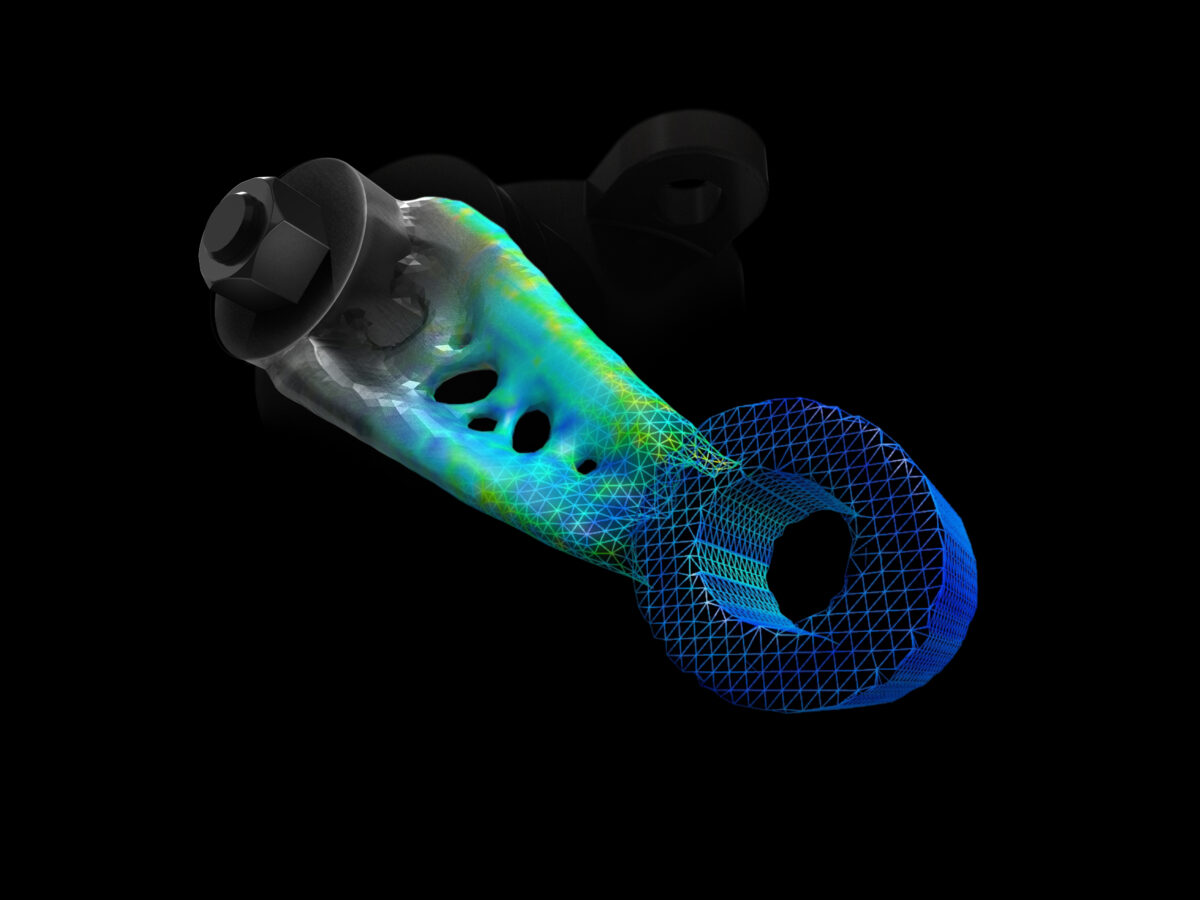
Yes, and that’s what takes these applications beyond convenience. In one material-performance test, the Royal Dutch Navy used a carbon-fiber-composite winch link, printed on an UltiMaker S5, to lift a 12-ton M113 armored personnel carrier. It’s a direct demonstration that printed parts can hold up under genuine structural load, not just serve as placeholders.
On the maintenance side, the Royal Netherlands Air Force uses UltiMaker 3D printers to produce custom tooling for the upkeep of Chinook, Apache, NH90, and F-16 aircraft, putting printed tools directly into the maintenance workflow for some of the most demanding equipment in their fleet.
Why This Matters for Defense Contractors and DOD Suppliers
Every example above shares the same underlying logic: when the part isn’t in stock, isn’t in reach, or would take months to source through traditional channels, the ability to print it on-site in hours instead of weeks, at a fraction of the cost, isn’t a nice-to-have. It’s operational readiness.
For facilities operating under CMMC, DFARS, or ITAR requirements, there’s a second layer: the printer producing these parts needs to be as trustworthy as the part itself. That’s where an air-gapped, USB-only system like the UltiMaker S8 Secure earns its place: no wireless attack surface, no cloud dependency, and full control over where design files go.
Ready to see which printer fits your environment? Explore the UltiMaker Secure line → | Talk to a specialist →
Frequently Asked Questions
Real deployed examples include replacement filtration components, antenna mounts, custom maintenance tooling, communication brackets, and personal field gear, ranging from structural, load-bearing parts to smaller ergonomic and organizational items.
In documented defense cases, cost reductions ranged from roughly 80% to well over 90%, with lead times dropping from weeks or months to hours or days, depending on the part and material.
Yes, they can. In one material-performance test, a 3D printed carbon-fiber-composite winch link was used to lift a 12-ton armored personnel carrier, showing that printed parts can serve load-bearing roles, not just placeholder or prototype functions.
Air-gapped, USB-only operation with no Wi-Fi or cameras, TAA compliance, GSA availability, and manufacturing in a trusted country are the core requirements most defense buyers evaluate first.
Sources: UltiMaker Application Development, Defense (AE team); UltiMaker, “3D Printing Solutions for Military and Defense Applications” whitepaper.