
Categories
Aerospace Defense Manufacturing

How Airbus Uses 3D Printing for Tools, Jigs, and Lightweight Parts

Aerospace production doesn’t leave much room for error. Every jig, fixture, and tool on the floor has to meet the same standard as the parts it helps produce. Traditionally, that has meant slow, expensive tooling cycles through outside machine shops. Airbus, however, took a different approach: bringing 3D printed jigs and fixtures in-house.

Key Takeaways

  • Airbus uses UltiMaker 3D printers and Cura software to produce tools, jigs, and fixtures at its European manufacturing facilities.
  • It also prints lightweight design parts from composite materials.
  • Printed tooling delivers part-to-part consistency, lower weight, and same-day design iteration.
  • The same pattern applies across aerospace and defense: jigs, fixtures, inspection gauges, and assembly aids made on-site.
Aerospace technician servicing an aircraft engine

What Is Airbus Using 3D Printing For?

Airbus uses UltiMaker 3D printers and Cura software to locally produce tools, jigs, and fixtures at its European manufacturing facilities, along with lightweight design parts made from composite materials. As a result, engineers don’t route every tooling need through traditional manufacturing. Instead, they design, print, and deploy what they need directly on the floor.

Why 3D Printed Jigs and Fixtures Fit Aerospace Manufacturing

A few things make this approach a particularly strong fit for aerospace production environments:

  • Consistency and repeatability. Jigs, fixtures, and tooling used in aerospace production need to produce the same result every time. Printed tools offer that consistency without the lead time of machining a new one from scratch.
  • Weight matters everywhere in aerospace. Composite materials let engineers produce lightweight parts that hold up to production demands without adding mass. In most other sectors, that consideration doesn’t carry the same weight (literally).
  • In-house iteration speed. When a jig needs a design tweak, an added handle, or a modified fit, the change can go from CAD to printed part the same day. In contrast, an external vendor’s queue can take weeks.

3D Printed Jigs and Fixtures Across Aerospace and Defense

Engineers designing 3D printed jigs and fixtures in UltiMaker Cura

This isn’t unique to Airbus. In fact, across aerospace and defense manufacturing, the same tooling categories keep showing up: custom jigs and fixtures, inspection gauges, assembly aids, and on-demand replacement tooling. All of them can be made on-site. Moreover, each one can be improved the moment feedback from the floor identifies a problem. Similarly, defense maintenance teams follow the same model; see how defense teams are using 3D printing in the field.

Where Dynamism Fits

As an authorized reseller, Dynamism helps aerospace and defense manufacturers identify the right printer and materials for production-floor tooling, from the S-series platform used in examples like this to the higher-throughput Factor line for continuous production. For programs with data-security requirements, the UltiMaker Secure line adds air-gapped, USB-only operation.

Related reading: What NIST 800-171 means for your 3D printing setup | How UltiMaker 3D printers reached Navy and Marine bases

Curious what this could look like on your floor? Explore the UltiMaker Secure line → | Talk to a specialist →

Frequently Asked Questions

What is Airbus using 3D printing for?

Airbus uses UltiMaker 3D printers and Cura software to locally produce tools, jigs, and fixtures, along with lightweight composite parts, at its European manufacturing facilities.

Why are jigs and fixtures a common 3D printing application in aerospace manufacturing?

They require part-to-part consistency and often need frequent design iteration, both of which 3D printing supports without the lead time of external machining.

Can 3D printed parts meet aerospace material and weight requirements?

Composite materials used in aerospace-grade 3D printing are selected to balance strength with reduced weight, an important factor given how directly weight affects aerospace production and performance.

What printer types are used for aerospace production tooling?

Applications range from desktop-class systems like the UltiMaker S-series for smaller jigs and fixtures to higher-throughput industrial platforms like the Factor line for continuous production environments.


Source: UltiMaker, “3D Printing Solutions for Military and Defense Applications” whitepaper.

Categories
3D Printing Aerospace Education Engineering Healthcare Manufacturing

Tullomer Filament: Breakthrough Findings on Low-Outgassing for Ultra-High Vacuum Applications

Tullomer: The Ideal Low-Outgassing Filament for UHV Applications

With its remarkably low outgassing properties, Tullomer outperforms standard materials like PEEK, making it ideal for UHV applications. Extensive testing, including residual gas analysis, has proven its reliability in maintaining pristine vacuum conditions, making it a top choice for industries like aerospace and semiconductor manufacturing.

When designing components for ultra-high vacuum (UHV) applications, the choice of materials is crucial. Metals and ceramics have traditionally been favored due to their low outgassing properties, but recent advances in 3D printing are bringing plastics into the conversation. Evaluating these 3D-printed materials, particularly in terms of outgassing and residual gas analysis (RGA), is essential to ensuring they can maintain the integrity of a UHV environment.

Outgassing Challenges in UHV Applications

Outgassing refers to releasing trapped gasses from a material when exposed to vacuum conditions. 3D-printed plastics often present challenges due to the nature of polymer absorption and their manufacturing process, which can leave microscopic voids and unreacted compounds. For 3D-printed plastics to be viable for UHV applications, their outgassing properties must be minimized. Common strategies for reducing outgassing include baking components in a vacuum oven and applying specialized surface coatings.

Residual Gas Analysis and Testing Results

Residual Gas Analysis is a critical process used to evaluate the suitability of materials for UHV applications. By measuring the gases released from a material in a vacuum, RGA allows engineers to detect contaminants and the material’s overall outgassing characteristics.  In tests, Tullomer filament has shown a significantly lower emission of residual gases, making it a top choice for environments where even trace contaminants can cause issues.

Tullomer’s Superior Outgassing Performance

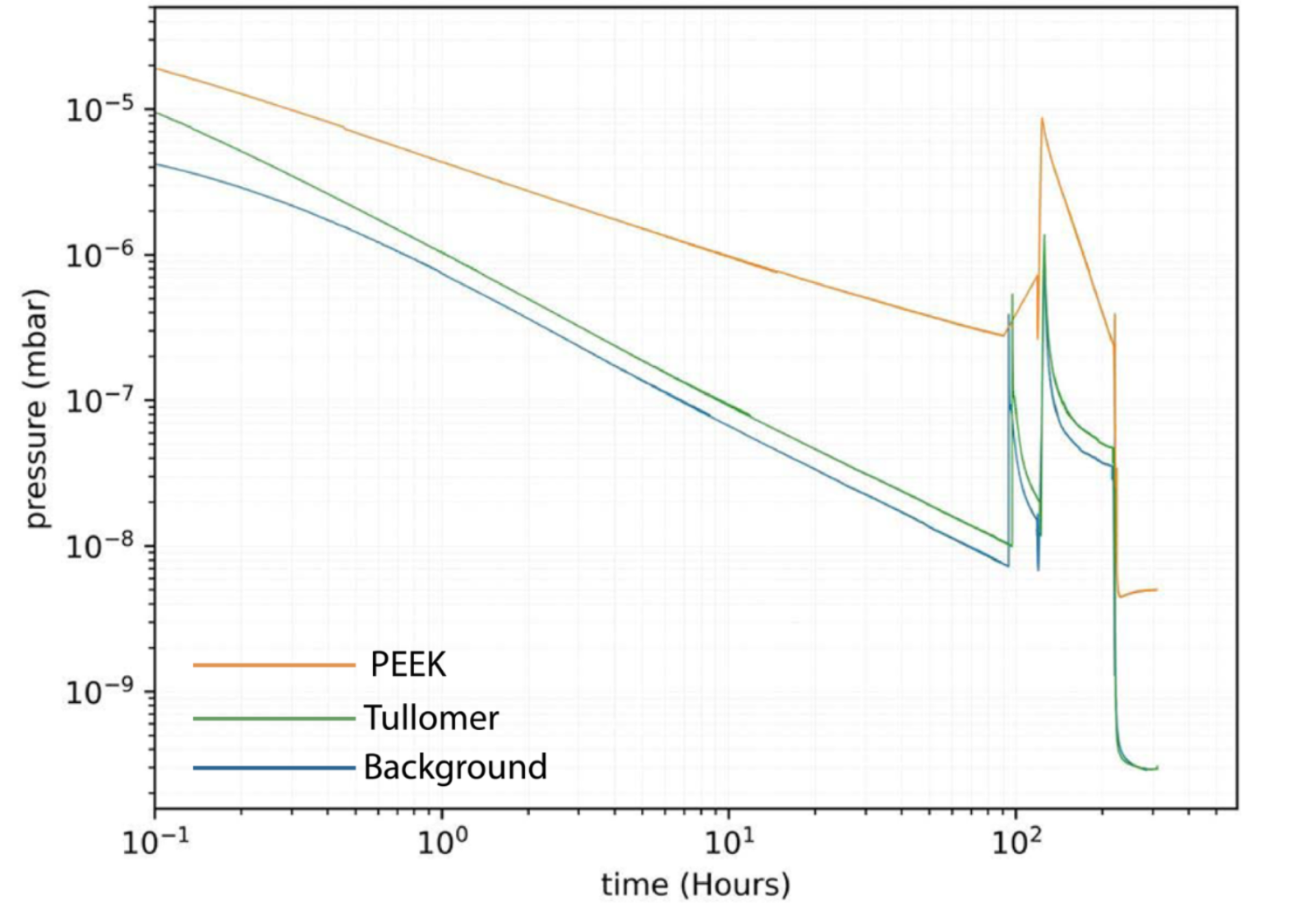
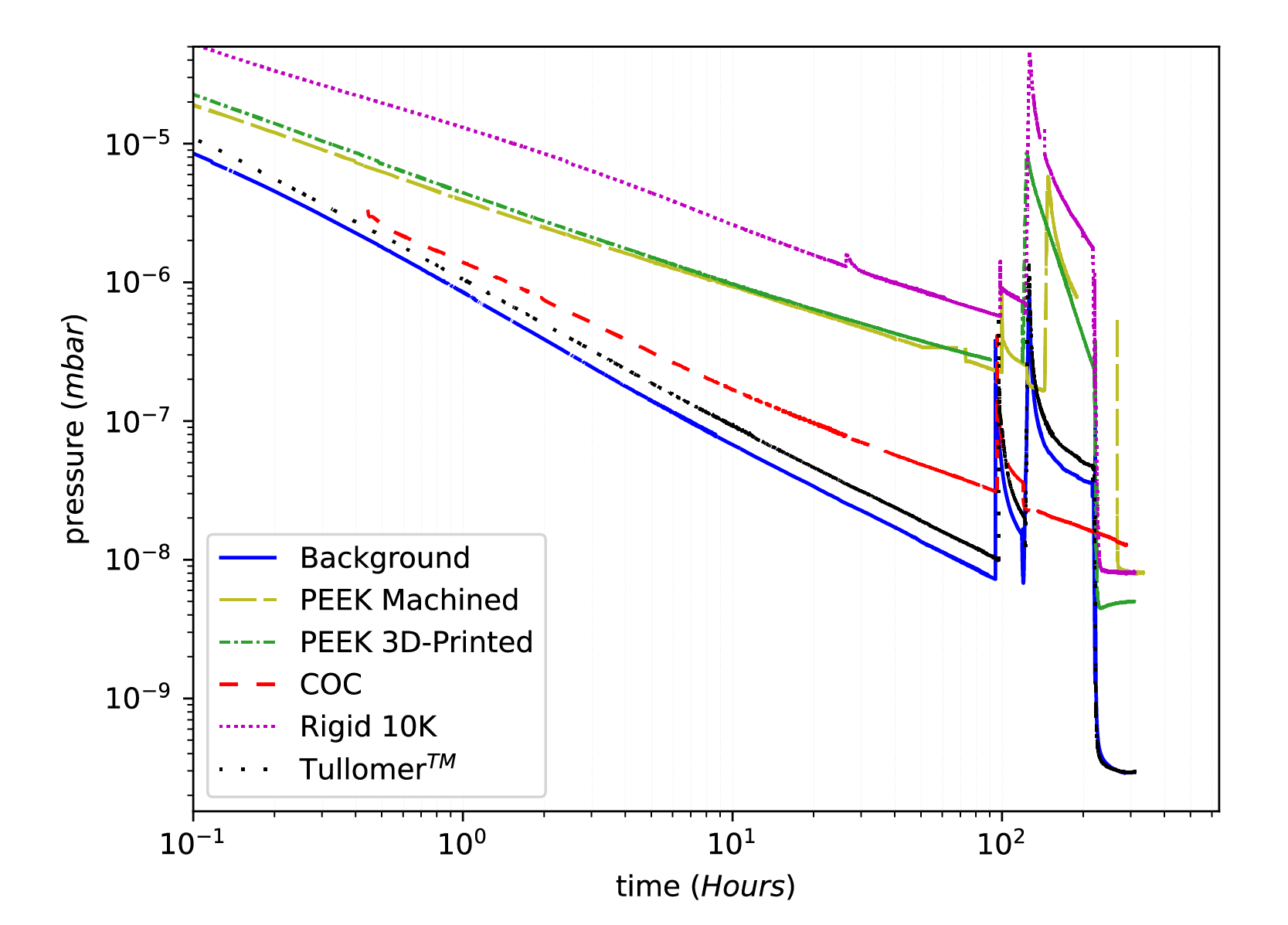
Tullomer filament has been scientifically proven to significantly outperform other materials in minimizing outgassing. In a recent study conducted by Lund University, Tullomer demonstrated an outgassing rate lower than industry-standard PEEK after a standard bakeout process. The results were so impressive that Tullomer reached the system detection limit post-bakeout, making it an ideal choice for engineers and researchers in UHV applications. These groundbreaking findings were presented at the SRI conference in Hamburg, where experts praised Tullomer for its unmatched outgassing performance in vacuum environments. As a result, Tullomer is now considered the top material for applications where maintaining vacuum conditions is critical.

Applications in Aerospace and Semiconductor Manufacturing

The unique formulation of Tullomer filament offers more than just low outgassing. It also provides exceptional strength and thermal stability, making it ideal for high-performance applications in both high-vacuum (HV) and UHV systems. Its low desorption rates ensure that vacuum conditions remain pristine, minimizing contamination risks while ensuring reliable operation over extended periods. Extensively tested and validated by leading experts in vacuum technology, Tullomer is engineered for precision. Whether you’re developing complex components for UHV research or deploying systems in critical environments like aerospace or semiconductor manufacturing, this filament offers unmatched performance, with proven results that set it apart from competitors like PEEK.

Why Tullomer is the Future of UHV-Compatible Filaments?

With the development of advanced filaments like Tullomer, 3D-printed plastics are set to become a reliable choice for UHV applications. While traditional polymers like PEEK and ULTEM have demonstrated solid performance, Tullomer’s revolutionary low-outgassing properties place it ahead of the curve. Its strength, thermal stability, and precision make it an indispensable material for engineers and researchers working in ultra-high vacuum environments. By minimizing outgassing and ensuring high system reliability, Tullomer elevates the standard for vacuum-compatible materials. Whether you’re prototyping or producing critical components, switching to Tullomer offers a new level of performance backed by scientific validation and industry trust.

Tullomer Out Performs All Tested Samples

Tullomer performed significantly better both before and after the bakeout, even reaching the detection limit of our setup for the sample size after the bakeout.

Tullomer vs PEEK

Tullomer filament residual gas analysis results

Tullomer vs all samples

Tullomer filament residual gas analysis results

Download The Full Case Study Results

Lund University’s Study on Outgassing Performance

Evaluation of 3D-Printed Plastics for Ultra-High Vacuum applications: Outgassing, and Residual Gas Analysis

Marketing by
Tullomer Filament

Tullomer: Minimize Outgassing, Maximize Performance

Categories
Aerospace Engineering

Topological Optimization of Metal Parts

Topological Optimization of Metal Parts

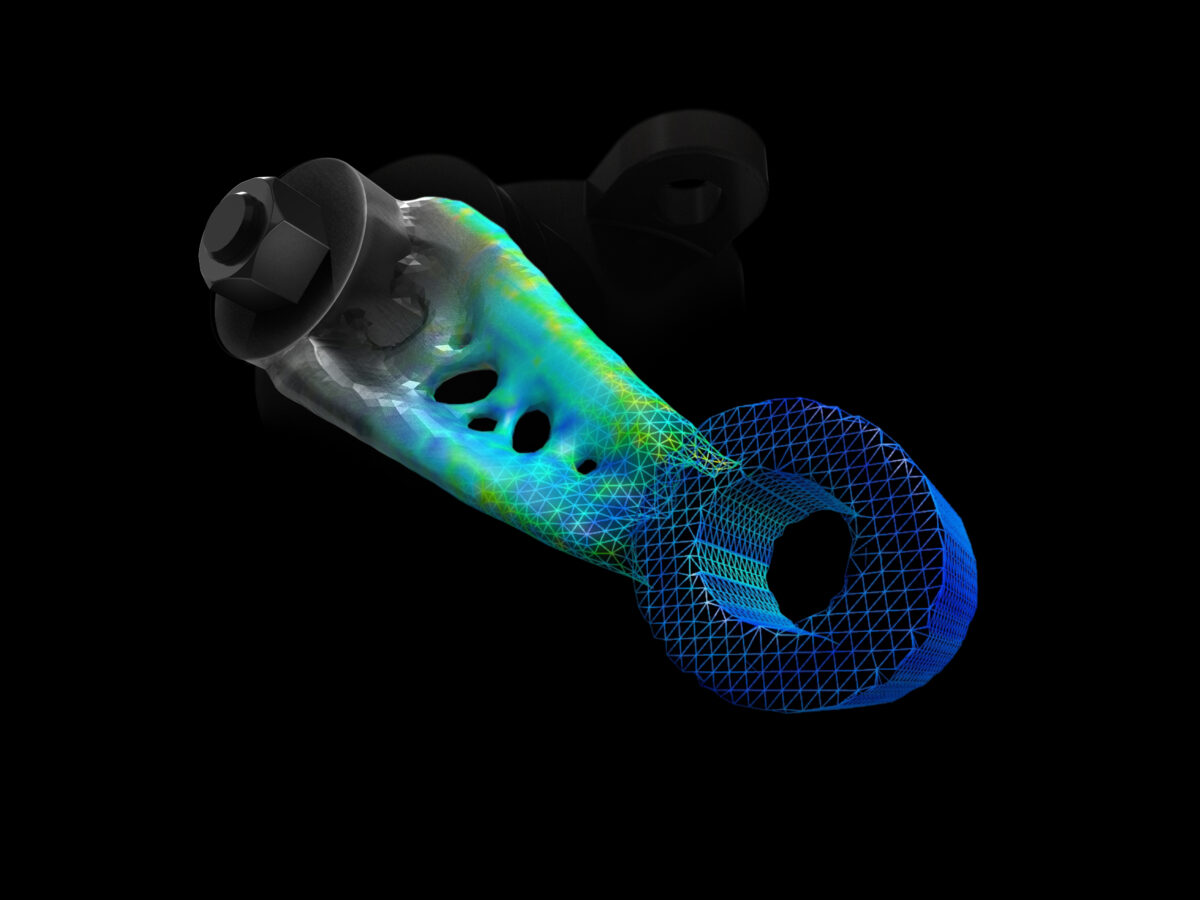
Find out how Solidform, an industry pioneer in the casting prototype business that has manufactured investment and sand castings for the aerospace industry since 1980, was able to reduce an aerospace component’s weight by 65% while maintaining structural integrity. By optimizing this one part, they were able to achieve a fuel cost savings of nearly half a million dollars over the lifetime of an aircraft fleet. In this paper you will learn to:

  • Optimize parts for reduced weight while maintaining strength requirements
  • Implement scalable additive manufacturing to meet changing demands
  • Create castable patterns directly with a 3D printer